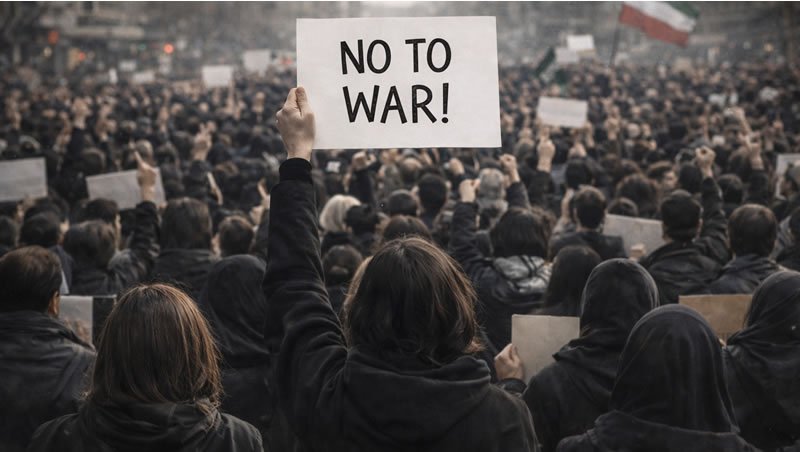
دونالد ترامپ، رئیسجمهور آمریکا، و دولت او بارها ایران را به حمله به سامانههای انرژی و حملونقل این کشور تهدید کردهاند. صرفنظر از اینکه این تهدیدها در نهایت عملی شوند یا نه، چنین اظهاراتی عمیقاً غیرمسئولانه است، بار سنگینی بر جمعیت غیرنظامی ایران تحمیل میکند و از منظر حقوق بشردوستانه بینالمللی، از جمله حمایتهای مقرر برای اموال و تأسیسات غیرنظامی در ماده ۵۴ پروتکل الحاقی اول به کنوانسیونهای ژنو، نگرانیهای جدی ایجاد میکند. ما، دانشگاهیان و هنرمندان، از رهبران سیاسی، مدنی و فرهنگی و نیز نهادهای آموزشی و فرهنگی میخواهیم این لفاظیهای بیپروا و خطرناک را با قاطعانهترین عبارات ممکن محکوم کنند و از تمامی ابزارهای دیپلماتیک، سیاسی و حقوقی در اختیار خود برای متقاعد کردن دولت آمریکا به توقف طرح چنین تهدیدهایی استفاده کنند.
در پنج ماهی که از آغاز جنگ غیرقانونی آمریکا و اسرائیل علیه ایران[i] میگذرد، حدود ۹۰ میلیون ایرانی ناگزیر شدهاند با افزایش شمار کشتهها و مجروحان، آوارگی و دشواریهای اقتصادی دستوپنجه نرم کنند. برآوردهای محافظهکارانه نشان میدهد که بیش از ۳۴۰۰ نفر کشته شدهاند،[ii] و شمار بسیار بیشتری نیز زخمی شدهاند. همزمان، شمار عظیمی از ساختمانهای مسکونی و دیگر ساختمانهای غیرنظامی ویران شدهاند،[iii] و اماکن میراث فرهنگی نیز آسیبهای گستردهای دیدهاند.[iv] حملات به صنایع غیرنظامی، از جمله بخشهای فولاد و پتروشیمی،[v] معیشت میلیونها خانوار را تحت تأثیر قرار داده، به اقتصادهای منطقهای آسیبهای شدید وارد کرده و به بیکاری گسترده انجامیده است.[vi] ایران همچنین شاهد بحرانی بیسابقه در حوزه سلامت روان است و خطوط تلفن ویژه و خدمات رواندرمانی مرتبط با آن با حجم فزایندهای از مراجعهکنندگان روبهرو شدهاند (نگاه کنید به پانویس x).
علاوه بر پیامدهای مادی و ملموس جنگ، رئیسجمهور ترامپ، در کنار شمار زیادی از دیگر سیاستمداران آمریکایی، بارها تهدید کرده است که «یک تمدن کامل» را از بین خواهد برد و همچنین وعده داده است ایران را «به عصر حجر» بازگرداند. نباید اجازه داد چنین ادبیات غیرانسانی و آشکارا نسلکشانهای بدون اعتراض و چالش باقی بماند.
رئیسجمهور آمریکا طی پنج ماه گذشته دستکم در دوازده مورد مردم ایران را به مجازات جمعی و نابودی گسترده تهدید کرده و بارها وعده داده است زیرساختهای حیاتی انرژی، آب و حملونقل ایران را نابود کند.[vii] عملی شدن چنین تهدیدهایی خدمات ضروری و دسترسی به مراقبتهای بهداشتی و آموزش را در مقیاسی گسترده از بین خواهد برد و جمعیت غیرنظامی را به دورهای تاریک از رنج و محرومیت بیسابقه فرو خواهد برد. اگرچه هرگونه اقدام از این دست، بر اساس حقوق بینالملل و مشخصاً ماده ۵۱ بند ۲ پروتکل الحاقی اول به کنوانسیونهای ژنو، آشکارا جنایت جنگی محسوب میشود، این ماده همچنین تهدید به خشونتی را که هدف اصلی آن ایجاد رعب و گسترش ترس در میان جمعیت غیرنظامی باشد، ممنوع میکند.[viii] چنین تهدیدهایی مردم را در هراسی دائمی از جان خود و همچنین سلامت و امنیت عزیزانشان گرفتار میکند.[ix] روایتهای دستاول و گزارشهای متخصصان سلامت روان نشان میدهد که پس از هر تهدید از سوی سیاستمداران آمریکایی، بهویژه تهدیدهایی که از سوی رئیسجمهور آمریکا مطرح میشود، شمار زیادی از ایرانیان دچار دورههای حاد اضطراب و پریشانی روانی میشوند، زیرا ناگزیر خود را برای احتمال اختلالات فاجعهبار در خدمات انرژی، ارتباطات مخابراتی و دیگر خدمات عمومی حیاتی آماده میکنند.[x]
این تهدیدها نه توخالیاند و نه صرفاً نمایشی سیاسی. این تهدیدها در متن تاریخی طولانی از خشونت نظامی آمریکا علیه غیرنظامیان و زیرساختهای غیرنظامی، از ژاپن و کره گرفته تا ویتنام، عراق، افغانستان و فراتر از آن، معنا پیدا میکنند و دقیقاً به همین دلیل باید جدی گرفته شوند.[xi]
ما از رهبران سیاسی، مدنی و فرهنگی و همچنین نهادهای آموزشی و فرهنگی میخواهیم استفاده دولت آمریکا از تهدیدهای مکرر به نابودی گسترده و مجازات جمعی مردم ایران و زیرساختهای غیرنظامی این کشور را با قاطعانهترین عبارات ممکن محکوم کنند[xii] و از تمامی ابزارهای دیپلماتیک، سیاسی و حقوقی در اختیار خود برای متقاعد کردن دولت آمریکا به توقف طرح چنین تهدیدهایی استفاده کنند. ما بر این باوریم که چنین گفتمانی نهتنها ۹۰ میلیون شهروند ایران، پیر و جوان، را به وحشت میاندازد و موجب اضطراب عمیق در میان آنان میشود، بلکه تهدید به ارتکاب جنایات جنگی و تصورات غیرانسانی از مرگ گسترده غیرنظامیان را عادیسازی میکند و در نتیجه، دههها تلاش برای شکلگیری حقوق و هنجارهای بینالمللی پس از جنگ جهانی دوم را از بین میبرد.
این بیانیه را بیش از ۲۰۰ نفر از دانشگاهیان، نویسندگان و هنرمندان امضا کردهاند؛ از جمله جودیت باتلر، کورنل وست، يرواند آبراهامیان، آصف بیات، محسن يلفانی، لاله خلیلی، ولی نصر، حمید دباشی، دیوید مکنالی، والنتاین مقدم، ساموئل موین، آرشین ادیبمقدم، نرگس باجغلی، کاتریون بابایان، یاسمین ميظر، آرش داوری، مجتبی مهدوی، هما هودفر، فرزانه ميلانی، آزاده کيان، فاطمه صادقی، مازيار بهروز، منصوره شجاعی، پیتر هالوارد، آلبرتو توسکانو، محمد مالجو، سعید پیوندی، افشین متینعسگری…
برای تماس با سازماندهندگان:
waroniranpetition@gmail.com
لينک و منابع:
https://docs.google.com/forms/d/e/۱FAIpQLSe۶Q۰maWGTvXWX۳wjcW۰jmh۹gaXPbbFmg۶X۴UTUmYZSXTrKpA/viewform
Academics and artists call to denounce US threats against Iran’s civilian population and vital infrastructure
President Donald Trump and his administration have repeatedly threatened Iran with attacks on its energy and transportation systems. Whether or not these threats are ultimately carried out, they are deeply irresponsible, place an undue burden on Iran’s civilian population, and raise serious concerns under international humanitarian law, including the protections afforded to civilian objects under Article ۵۴ of Additional Protocol I to the Geneva Conventions. We, academics and artists, urge political, civic, and cultural leaders and educational and cultural institutions to condemn this reckless and dangerous rhetoric in the strongest possible terms and to use all diplomatic, political, and legal means at their disposal to persuade the U.S. administration to cease making such threats.
In the five months since the US and Israel initiated their illegal war on Iran,[i] some ۹۰ million Iranians have been forced to endure mounting death, injury, displacement and economic hardship. Conservative estimates indicate that more than ۳,۴۰۰ people have been killed,[ii] with many more wounded. Meanwhile, vast numbers of residential and other civilian buildings have been destroyed,[iii] and cultural heritage sites devastated.[iv] Attacks on civilian industries such as the steel and petrochemical sectors[v] have impacted the livelihood of millions of households, severely damaging regional economies and creating mass unemployment.[vi] Iran is also witnessing an unprecedented mental health crisis with related hot lines and psychotherapy services being overwhelmed (see footnote x).
Besides the concrete material effects of war, President Trump, alongside a slew of other US politicians, has regularly issued threats to wipe out a “whole civilization”, as well as pledging to send Iran “back to the Stone Age”. Such dehumanising and blatantly genocidal rhetoric must not be allowed to pass without challenge.
The U.S. President has threatened collective punishment and mass annihilation on at least a dozen occasions during the past five months, and repeatedly vowed to destroy Iran’s critical energy, water and transportation systems.[vii] Acted upon, such threats would decimate essential services and access to healthcare and education, and plunge the civilian population into a dark period of unprecedented misery and destitution. While any such action clearly constitutes a war crime in accordance with international law, namely Article ۵۱(۲) of Additional Protocol I to the Geneva Conventions, this article also prohibits threats of violence whose primary purpose is to terrorize and spread fear among the civilian population[viii]. Such threats embroil the population in constant fear for their lives as well as the safety and security of their loved ones.[ix] First-person accounts and reports by mental health practitioners indicate that in the aftermath of each threat by U.S. politicians, especially those issued by the US president, myriad Iranians undergo acute bouts of anxiety and psychological distress, as they inevitably prepare for the prospect of catastrophic disruptions to energy, telecommunications, and other vital public services.[x]
Such threats are neither idle nor mere political theatre. They resonate and should be taken seriously exactly because they stand in a long history of U.S. military violence against civilians and civilian infrastructures, from Japan to Korea, Vietnam, Iraq, Afghanistan, and beyond.[xi]
We call upon political, civic and cultural leaders as well as educational and cultural institutions to condemn in the strongest terms the U.S. administration’s use of repeated threats of mass extermination and collective punishment against the Iranian people and their civilian infrastructures[xii] and to use all diplomatic, political, and legal means at their disposal to persuade the U.S. administration to cease making such threats. We believe such discourse, not only terrorizes and induces profound anxiety among Iran’s ۹۰ million citizens, young and old alike, but that it normalizes threats of war crimes and dehumanizing imaginaries of mass civilian death, eroding decades of international law and norm-building following the Second World War.
To contact the organisers email: waroniranpetition@gmail.com
References:
[i]House of Commons Library, “Israel/US-Iran conflict ۲۰۲۶: Background and UK response,” Research Briefing CBP-۱۰۵۲۱, UK Parliament.
[ii]Iran’s Ministry of Health recorded at least ۳,۴۶۸ people killed between ۲۸ February and ۸ April ۲۰۲۶, including seven infants, ۳۷۶ children and ۴۹۶ women, with more than ۲۶,۵۰۰ injured (reported via Al Jazeera’s casualty tracker, ۵ May ۲۰۲۶). The Human Rights Activists News Agency (HRANA) documented ۳,۶۳۶ deaths as of ۷ April ۲۰۲۶, of which ۱,۷۰۱ were civilians, including at least ۲۵۴ children. UN special procedures mandate holders stated that operations between ۲۸ February and early April ۲۰۲۶ killed at least ۳,۳۷۵ civilians and injured more than ۳۳,۰۰۰. The Norway-based Hengaw Organization for Human Rights recorded a higher overall total of ۷,۶۵۰ killed across the first forty days, reflecting deeper documentation of military casualties. See National Iranian American Council, “Civilian Casualties and Housing Damage in Iran,” ۲۰۲۶, for a cross-source comparison.
[iii]Prism, “The U.S.-Israeli war on mental health in Iran,” ۹ April ۲۰۲۶, reporting more than ۱۰۰,۰۰۰ civilian buildings damaged, including commercial premises. The United Nations Development Programme has documented widespread displacement resulting from the air campaign; see CNN, “Iran’s economy was in a dire state before the war. Now millions face job losses and poverty,” ۲۸ April ۲۰۲۶.
[iv]UNESCO confirmed damage to several World Heritage properties, including the Qajar-era Golestan Palace in Tehran, the seventeenth-century Chehel Sotoun pavilion and the Masjed-e Jāme’ in Isfahan, and structures near the Khorramabad Valley. UNESCO stated that it had provided all parties with the geographic coordinates of heritage sites in advance so that precautions could be taken. See PBS NewsHour, “US and Israeli strikes are damaging Iranian historical sites,” ۲۰۲۶. Iran’s Ministry of Cultural Heritage reported at least ۵۶ damaged sites in mid-March, rising to over ۱۳۱ by ۳۱ March ۲۰۲۶, and submitted documentation to UNESCO citing the ۱۹۵۴ Hague Convention. Several affected buildings carried the Blue Shield emblem; see Iran International, “War leaves its mark on Iran’s cultural heritage,” ۱۳ March ۲۰۲۶.
[v]Israeli strikes on ۲۷ March ۲۰۲۶ hit the Mobarakeh Steel Company in Isfahan and the Khuzestan Steel Company in Ahvaz — together roughly half of Iran’s steel output — with a second round against Mobarakeh on ۳۱ March. Satellite analysis of flare activity indicates production ceased and did not resume. New Lines Magazine, “How Israeli Airstrikes Targeted Iran’s Steel Industry,” ۲۰ May ۲۰۲۶, notes the sector is tied to ۱.۲ million jobs. On ۴ April ۲۰۲۶, eight petrochemical plants in the Mahshahr industrial zone were struck, including the Bandar Imam complex; Middle East Forum, “The Economic Consequences of Targeting Iran’s Steel, Infrastructure, and Petrochemicals,” ۷ April ۲۰۲۶.
[vi]Iran’s Deputy Minister of Labour, Gholamhossein Mohammadi, confirmed at least one million direct job losses; media outlet EcoIran reported more than ۲۳,۰۰۰ factories and firms hit. Economist Hadi Kahalzadeh estimated ۱۰–۱۲ million jobs at risk. CNN, ۲۸ April ۲۰۲۶. Iran International reported that over ۲۷,۰۰۰ workers at Mobarakeh Steel remained in limbo following the strikes (“Wage crisis hits ۲۷,۰۰۰ workers as Iran’s top steel plant remains crippled,” ۷ May ۲۰۲۶). Persian Gulf Petrochemical Industries Co. disclosed to Iran’s Securities and Exchange Organization that output at six of its seven main plants fell roughly ۸۷ per cent in spring ۲۰۲۶, largely because strikes disabled the utilities feeding entire factory clusters rather than the plants themselves (Iran Open Data, ۱۸ June ۲۰۲۶). The UNDP estimated up to ۴.۱ million additional people could fall into poverty as a result of the conflict.
[vii]Documented occasions on which President Trump threatened Iranian energy, water or transport infrastructure include: ۱۳ March ۲۰۲۶, warning that the United States could destroy power plants generating electricity and water, with effects from which Iran could not rebuild; ۲۱ March, threatening to obliterate power plants; ۲۳ March, announcing a postponement of strikes on power plants and energy infrastructure; ۲۶ March, pausing “Energy Plant destruction” for ten days; ۳۰ March, threatening widespread destruction of energy resources including desalination plants supplying drinking water, and suggesting US forces could seize the Kharg Island oil export hub; ۱ April, stating an intention to return Iran to a pre-industrial condition; ۴ April, warning that time was running out; ۵ April, announcing “Power Plant Day, and Bridge Day”; ۶ April, stating at a White House press conference that every bridge and power plant in Iran would be destroyed within four hours; mid-July, warning that power plants and bridges were next; ۲۲ July, undertaking to destroy one bridge or power plant, including in Tehran, for each Iranian attack on shipping in the Strait of Hormuz; and ۳۱ July, with reports that strikes on energy infrastructure were being actively prepared. Sources: PBS NewsHour, “A timeline of Trump’s shifting statements about how long the Iran war will last,” ۲۱ April ۲۰۲۶; NPR, ۲۴ March and ۶ April ۲۰۲۶; AFP via Malay Mail, ۲۷ March ۲۰۲۶; Associated Press via PBS NewsHour, ۳۰ March ۲۰۲۶; Al Jazeera, ۵ April ۲۰۲۶; TIME, ۵ April ۲۰۲۶; Argus Media, ۶ April ۲۰۲۶; Fox News, July ۲۰۲۶; CNBC, ۲۲ July ۲۰۲۶; CNN, CBS News and Axios, ۳۱ July ۲۰۲۶.
[viii]Article ۵۱(۲) of Additional Protocol I (۱۹۷۷) provides that acts or threats of violence whose primary purpose is to spread terror among the civilian population are prohibited. The ICRC’s ۱۹۸۷ Commentary observes expressly that threats of such acts are also prohibited, recalling past proclamations threatening the annihilation of civilian populations. Article ۵۴ prohibits attacks on objects indispensable to the survival of the civilian population, including drinking water installations and supplies. Although the United States is not a party to Additional Protocol I, it accepts the Article ۵۱ principle as customary international law, and the prohibition is reflected in the US Department of Defense Law of War Manual (§§ ۵.۲.۲, ۶.۷.۳, ۱۰.۵.۳.۲) and in ICRC Customary IHL Study Rule ۲. See ICRC, IHL Databases, Additional Protocol I, Article ۵۱; and Lieber Institute, West Point, “Terrorizing Civilians and the Law of Armed Conflict.”
[ix]The president of the International Committee of the Red Cross, Mirjana Spoljaric Egger, stated on ۲۳ March ۲۰۲۶ that war on essential infrastructure is war on civilians, describing threats to nuclear power plants as most alarming. More than one hundred international law scholars subsequently signed an open letter concluding that the strikes violate the UN Charter and that the threatened attacks on energy infrastructure, if carried out, could constitute war crimes; see Just Security, “Over ۱۰۰ International Law Experts Warn: U.S. Strikes on Iran Violate UN Charter and May Be War Crimes,” April ۲۰۲۶. Human Rights Watch has separately warned that the threatened infrastructure attacks would amount to war crimes; see JURIST, ۲۴ July ۲۰۲۶.
[x]The Iranian Red Crescent Society reported fielding more than ۱۳۰,۰۰۰ calls to its psychological support helpline as of ۳۱ March ۲۰۲۶; Prism, ۹ April ۲۰۲۶. Mental health practitioners in Tehran have described sustained anxiety, panic and depressive symptoms across the population, and Iran’s Social Psychology Association has warned that pre-existing rates of mental illness will be worsened by the war; The National, ۳ July ۲۰۲۶. On the transnational reach of these effects, see “The mental health toll of the Iran-Israel-US conflict on the Iranian diaspora,” The Lancet Regional Health – Europe, ۱۷ March ۲۰۲۶.
[xi]In the ۱۹۹۱ Gulf War, coalition forces struck ۲۸ Iraqi power plants in ۲۱۵ sorties, shutting down the national grid within the first week. A United Nations mission described the damage as near apocalyptic and found that Iraq had been reduced to a pre-industrial condition. The destruction of the electrical grid disabled water purification and sewage treatment, producing epidemics of dysentery, cholera and other waterborne disease. See Center for Economic and Social Rights, “Water Under Siege in Iraq,” which records a minimum of ۱۱۰,۰۰۰ civilian deaths attributable to infrastructure attacks, the majority indirect. On child mortality specifically, see “The Effect of the Gulf Crisis on the Children of Iraq,” New England Journal of Medicine, ۲۶ September ۱۹۹۱, which identifies the destruction of electrical infrastructure as the predominant factor in epidemic waterborne disease. Reporting by Barton Gellman in the Washington Post recorded that some targets were struck to create postwar leverage rather than to affect the course of the conflict.
[xii]UN special procedures mandate holders have repeatedly condemned the conduct of the war and called for independent investigations. See OHCHR, “Iran: UN experts call for de-escalation and accountability,” March ۲۰۲۶; “Resumption of US-Iran hostilities betrays peace memorandum, deepening civilian suffering across the region,” July ۲۰۲۶; and “Iran: UN experts alarmed by renewed escalation of hostilities, call for accountability,” ۲۴ July ۲۰۲۶, which notes that five months after a primary school in Minab was struck during school hours on ۲۸ February ۲۰۲۶, killing ۱۶۸ children and several teachers, no findings had been made public.
Signatories
Judith Butler, Distinguished Professor, Author, University of California, Berkeley, Berkeley, CA
Laleh Khalili, Professor of Gulf Studies, University of Exeter, United Kingdom
Cornel West, Dietrich Bonhoeffer Professor of Philosophy & Christian Practice, Union Theological Seminary
Mohsen Yalfani, playwright, , No institution or affiliation , France
Ervand Abrahamian, Emeritus Professor of History, New York, US
Parastou Forouhar, Artist, Mainz, Germany
Asef Bayat, Professor, University of Illinois, Urbana-Champaign
David McNally, Distinguished Professor , University of Houston , Houston, USA
Amir Esbati, Film production designer and guild activist, Tehran. Iran
Valentine M. Moghadam, Professor of Sociology and International Affairs, Boston
Mohammad Maljoo, Economist, Tehran, IranAzam Khatam, Editor of Global Iranian Studies Review, University of Toronto, Toronto, Canada
Jean-Michel Frodon, Journalist and Professor , France
Agnès Devictor, Senior Lecturer , University of Paris ۱ Pantheon Sorbonne, Paris France
Vali Nasr, Professor, Johns Hopkins University-SAIS, Washington DC, USA
Afshin Matin-asgari, History professor, Cal state Los angeles, Los Angelrs, USA
Farzaneh Milani, Raymond J. Nelson Professor Emerita , University of Virginia, Richmond, Virginia
Ove Rishøj Jensen , Documentary Consultant , Copenhagen, Denmark
Samuel Moyn, Kent Professor of Law and History, Yale University , New Haven
Fatemeh Sadeghi, University College London , London, UK
Saeed Paivandi , Professor, University of Lorraine , Nancy- France
Azadeh Kian, Emerita Professor of Sociology , Université Paris Cité , Paris. France
Reza Haeri, Film maker, Tehran, Iran
Rania Kamla, Professor of Accounting, University of Edinburgh, Edinburgh United Kingdom
Hamid Dabashi, Hagop Kevorkian Professor of Iranian Studies and Comparative Literature, Columbia University, New York
Theresa Hammond, Professor, San Francisco State University
Adam Hanieh, Professor, Development Studies Department, SOAS University of London, London, UK
Eskandar Sadeghi-Boroujerdi, Assistant Professor in the International Relations of the Middle East, University of St Andrews, Scotland
Afshin Mehrpouya, Professor, University of Edinburgh, UK
Christine Cooper, Academic, Edinburgh, Scotland
Hadi Enayat , academic, London
Farzaneh Bahrami, Assistant Professor in Urban Design and Mobility, University of Groningen, Netherlands
Killian O’Dochartaigh , Associate Professor of Architecture and Urbanism , University of Edinburgh , United Kingdom
Lesley Catchpowle, Academic, London, UK
Sheida Ghomashchi, Curator, Tehran, Iran
Marina Calculli , Lecturer , Leiden University , Leiden
Virginia Giandelli, Architect, Chiavari, Italy
Helen Knowles, Director , Birth Rites Collection , UK
Yassamine Mather, University of Oxford, Oxford
Arash Davari, Assistant Professor of Political Science, University of Minnesota, Twin Cities, Minneapolis, MN, USA
Katharina Hunfeld, Associate Lecturer in International Relations, University of St Andrews, Edinburgh, Scotland
Sajjad Rizvi, Professor of Islamic Intellectual History , University of Exeter , United Kingdom
Arshin Adib-Moghaddam, Professor, SOAS, University of London, UK
Morad Moazami, Lecturer, St. Antony’s College, University of Oxford, Oxford
Arzoo Osanloo, Professor, Anthropology , Princeton University , Princeton, NJ
Rajyashree Pandey, Professor Emerita, Asian Studies, London, U.K
Toby C. Jones, Associate Professor, History, Rutgers University, New Brunswick, New Brunswick, NJ, USA
Hossein Radmard, University of Aberdeen, United Kingdom
Pier Gagliardi, artist, Vigevano Italy
Negar Razavi, Associate Research Scholar, Princeton, Princeton NJ
Mahgol Jaberansari, London – Tehran
Marianna Fotaki, Professor of business ethics , University of Warwick , United Kingdom
Nirvana Mousavi, North Vancouver, Canada
Hossein Kamaly, Endowed Chair Professor, Hartford International University for Religion and Peace, Hartford, CT, USA
Shima Tadrisi, PhD Candidate, Kiel University , Germany
Khaled Bachour, Senior Lecturer, University of Lincoln, Lincoln, UK
Narges Bajoghli, Associate Professor, Johns Hopkins University, School of Advanced International Studies, Washington, DC
Kathryn Babayan, Professor of History, University of Michigan, Ann Arbor, USA
Amir Nikpey, Professor of legal sociology-anrhropology , Shahid Beheshti University, Tehran Iran
Julien Malaurent, Professor of Information Systems, Paris, France
Alireza Delpazir, PhD Candidate in Sociology , University College London, London
Babak Rahimi, Professor of Culture, Religion, and Technology , UC San Diego, San Diego, United States
Sanaz Raji, Visiting Researcher, Northumbria University , UK
Farhad Ghoddoussi, academic, USA
Nima Machouf, Chargée de cours , École de santé publique, université de Montréal, Montréal, Canada
Shirin Vossoughi, Associate Professor, Learning Sciences, Northwestern University
Alessandro Fois, Netherlands
Zahra Tizro, Senior Lecturer Psychology , UEL, London, UK
Javad Alavi, Writer, Toronto, Canada
Robert Buzzanco, Professor Emeritus, University of Houston, Niles, Ohio
Arang Keshavarzian, Professor of Middle Eastern and Islamic Studies, New York University, New York, USA
Leila Chamankhah, Associate Professor of Political Science, Thapar Institute of Engineering and Technology, Patiala, India
Prashant Keshavmurthy, Professor of Iranian-Persian Studies, Montreal
Ali Keshavarzian, Professor of Medicine, Physiology, Anatomy and cell biology, Rush University Medical Center , Evanston, USA
Sheyda Etemad, Tehran/Iran
Bijan Khajehpour, Managing Partner, Eurasian Nexus Partner, Vienna, Austria
Nicola Perugini, Associate Professor in International Relations, University of Edinburgh , Edinburgh, United Kingdom
Mojtaba Mahdavi, Professor, Political Science, University of Alberta, Edmonton, Canada
Richard Tapper, Emeritus Professor, SOAS University of London, London, UK
Paola Rivetti , Associate Professor, Dublin city university , Dublin, Ireland
Majid Ebrahimpour, Researcher, Tehran, Iran
Maziar Behrooz, Professor of History, San Francisco State University, Berkeley, California, USA
Helia Hamedani, Art historian, Lecturer Pedagogy of Art , La Sapienza& RUFA, Rome, Italy
Ayat Najafi, Film and theater director, writer., Berlin, Germany
Siavash Saffari, Professor, Seoul National University, Seoul, South Korea
Naser Ghobadzadeh, Associate Professor, American University in Bulgaria, Bulgaria
Wafa Khlif, Professor, TBS Education, Spain
Flore Groen, Amsterdam
Layli Uddin, Senior Lecturer in Politics, Queen Mary University of London, London, United Kingdom
Ethemcan Turhan, Assistant Professor of Environmental Planning, University of Groningen, Groningen, the Netherlands
Sanjay Seth, Professor, University of St Andrews, United Kingdom
Mehdi Jami, journalist and independent researcher, NA, London, UK
Azadeh Moussavi, Filmmaker and Cinema Educator, Member, Iranian Producers Association (House of Cinema); Head of Cinema Department, Honarestan Honarhaye Zibaye Dokhtaran, Tehran, Iran
Arash Naimian, Filmmaker, Actor, Paris / Tehran
Alireza Abiz, London, the United Kingdom
Mansoureh Shojaee, Visiting researcher at VUA Social Sceince department, Amsterdam/ Netherlands
Mahin Sadri, Theater and filmmaker, writer, actress, Mehr Theatre Group, Tehran, Iran
Gjovalin Macaj, Assistant Professor, Leiden University, Netherlands
Robin Dingemans, Choreographer, performer & lecturer, Sweden / Aotearoa New Zealand / U.K.
Parviz Jahed, Lecturer of Film Studies and Dramatic Art, London.UK
Amir Tehrani, Tehran, Iran
Andrew Ross, Professor of Social and Cultural Analysis, NYU, USA
Mahmoud Ezzamel, Distinguished Professor, IE University,۸ Porthcawl, Wales, UK
Roozbeh Elias-Azar, Educator, Architectural Association , London, UK
Daryoush Mohammad Poor, academic, London
Kayvan Jafarinejad, PhD candidate , EHESS, Paris
Mahdie Toosi, Filmmaker and writer , Malmo university , Sweden
Mohammad Fadel, Professor of Law, University of Toronto Faculty of Law, Toronto, ON Canada
Crawford Spence, Professor, King’s College London, London, UK
Mohammad Al Amin, Poet and journalist , The Hague
Leila Pourtavaf, Assistant Professor, NYU, NYC, USA
Mary Yoshinari, Research Affiliate, University of Toronto, Toronto, Canada
David Cooper, Emeritus Business Professor, University of Alberta , Edmonton, Alberta
Anita Zangeneh, Canada, Vancouver
Luke Fuller, Artist, Brooklyn, NY USA
Norma Claire Moruzzi, Professor, University of Illinois Chicago, Chicago, USA
Cyrus Bina, Distinguished Research Professor Emeritus of Economics, University of Minnesota, Minnesata, USA
Fateme Ahmadi, Filmmaker, London, UK
Susan O’Leary, Associate Professor, Royal Holloway, UK
Shiva Taghavi, Associate Professor, NEOMA Business School, Paris, France
Majid Naficy, Poet, Los Angeles, US.
Ava Fathian Sabet, PhD Candidate, University of California, Berkeley, Berkeley, CA, USA
Foad Torshizi, Associate Professor of Art History, Rhode Island School of Design, Providence, RI, USA
Mehran Kashani , Writer , Tehran.iran
Sarah Kunz, Lecturer, University of Essex, UK
Lioba Hirsch, Lecturer in geographies of Health, UCL, London, UK
Peyman Jafari, Assistant Professor of History, William & Mary, Richmond, USA
Hamed Alavi, Assistant Professor of Computer Science , University of Amsterdam, Amsterdam, the Netherlands
Shahrzad Irannejad, Post-doc at Avicenna Study Center, Ruhr University Bochum, Bochum, Germany
Hossein Hamdieh , PhD in anthropology , Humboldt Berlin, Berlin
Maryam Abbasi , Social researcher, Germany
Fatima Tofighi, , University of Bonn, Bonn, Germany
Aida Vosoughi , Independent artist, , Montréal, Canada
Hugh Willmott, Professor of Management, City St George’s Cardiff, London
Shay Salem, , Copenhagen, Denmark
Mireille Selwanes Tawfik, Artist, , Montreal, Canada
Mohammad Kazeroun, Researcher in Computational Biology, University of Oxford, Oxford, United Kingdom
Mazen Masri, Senior Lecturer, The City Law School, City St. George’s University of London, London, UK
Marco Asciutti , Architect, , Milano, Italy
Farideh Farhi, Independent Scholar, Kaneohe, Hawa’i
Claire Burelli, Multidisciplinary artist and art teacher, Commission scolaire de Montréal , Montreal Quebec
Schoole Mostafawy, Dr. of History of Arts, Badisches Landesmuseum Karlsruhe , Karlsruhe, Germany
Amir Ahmadi Arian, Assistant Professor , Binghamton University, Ithaca, US
Yalda Ehsani, Musician, Canada
Shabnam R , Account Manager at Google Cloud, Google Cloud, United States
Zahra Babaei, PhD Student in Visual and Cultural Studies, University of Rochester, NY, USA
Elmira Mohebali, , , U.C. Davis, California, United States
Pooya Razi, Visual artist, Filmmaker, London, UK
Wafa Ben Khaled , Associate Professor, ESCP Business School, Paris, France
Homa Hoodfar, Professor of Anthropology Emerita, Concordia University, Montreal
Tue Steen Müller, film consultant, , Danmark
Milad, Frankfurt am Main, Germany
Mehran Mostafavi, Professor of Physical Chemsitry, Université Paris-Saclay, Orsayc/FRANCE
Mancy Rezaei , Artist, art mediator in Fine Arts Museum of Montreal, Montreal, Canada
Farzaneh Rezaei, Artist and art mediator at Fine art museum of Montreal , Montreal
Luc Guillemot , PhD in geography , Berlin, Germany
Reihaneh Hafizi, Associate Infrastructure Engineer, London, UK
Mahdi Khoei, Professor of Sociology, ATU – Allameh, Tehran, Iran
Ali Mashhadi Rafi, Assistant Professor of Iranian Studies , Bu-Ali Sina University , Hamedan, Iran
Maryam Tafakory, Filmmaker, Lecturer, Oxford University , UK
Sepehr Moeeni, Academic Staff Member, Institute of German Literary Studies, Friedrich Schiller University Jena, Jena, Germany
Shiva Shakoori, Writer , London/ UK
Sobhani Iradj, MD; PhD, Professor in Medicine, University of Paris Est Créteil (UPEC), CRETEIL-FRANCE
Mohsen Shahmanesh, Retired Consultant in Genitourinary Medicine and HIV, Queen Elizabeth University Hospital Birmingham, UK (retired), London
Bahar Azadi, Consultant paediatrician, Chelsea and Westminster Hospital , London, UK
Schirin Amir-Moazami , Professor of Islam in Europe , Freie Universität Berlin , Germany
Richard Woodward, Senior lecturer, University of Edinburgh Business School, Edinburgh, Scotland
Hajar Mozaffar, Senior Lecturer , The University of Edinburgh , Edinburgh, UK
Luisa Lorenza Corna, Lecturer , UWE Bristol, London
Tanya Serisier, Professor of Feminist Theory, Birkbeck, University of London, London, UK
Iraj Hoshi, Emeritus Professor of Economics, University of Staffordshire, Stoke-on-Trent, United Kingdom
Shela Sheikh, Senior Lecturer in International Politics, University of London Institute in Paris , France
Ali Gholipour , Independent researcher, , Toronto, Canada
Francisco Vidal Castro, Full Profesor of Arabic and Islamic Studies, Universidad de Jaén , Jaén, Spain
Alberto Toscano, Emeritus Professor of Critical Theory, Goldsmiths, University of London, Vancouver, Canada
Nariman Massoumi, Associate Professor in Film , University of Bristol, Bristol, UK
Narzanin Massoumi, Senior Lecturer, University of Exeter, UK
Ludivine Perray-Redslob, Professor, emlyon business school, Paris, France
Zahra Ansarilari, Transport Researcher, Iran, Shiraz
Amin Bozorgiyan , Researcher in the Department of Anthropology at Université Côte d’Azur, Nice, France, Strasbourg France
Roger Friedland, Emeritus Professor of Religious Studies and Sociology, University of California Santa Barbara, Santa Barbara, California
رمضان مالکی نژاد , دبیر, آموزش و پرورش , کرمان ایران
Yasaman Ehsani, Writer & Ethnographer, Ramsar, Iran
Feliciano Castaño Villar , Professor, Universidad de Jaén , Spain
Frank den Hond, Professor, Helsinki, Finland
Maud Wyler , Actress , France
Mehdi Farajpour, choreographer, Paris, France
Farshid M. Salimi, PhD Candidate in Political Science, University of Potsdam, Berlin
Nazy Azima, Writer, literary translator , Kosharitsa, Bulgaria
Hossein Naeim Abadi, Dr. , Freie Universität Berlin, Berlin, Germany
Mohammad Namazi , Lecturer, Media Arts , Royal Holloway University, London, UK
Emmanouela Mandalaki, Professor of Organizations, NEOMA BS, France
Hadi Daneshvar, Lecturer and researcher, Edinburgh/UK
Azadeh Shomali, Associate professor , ESSCA School of management , France
Maziyar Ghiabi, Associate Professor , University of Exeter , Exeter
Mohammad Nazarpoor, Lecturer and researcher in Urban Planning, Tehran, Iran
Alireza Doostdar, Associate Professor of Islamic Studies and the Anthropology of Religion, University of Chicago, Chicago, IL
Elhum Shakerifar , Producer and poet, Hakawati, London, United Kingdom
Lucia Pradella , Reader in International Political Economy , Kings College London, UK
Davoud Ashrafi, Film maker, Tehran, Iran
Rojia Forouhar, Architect, Tehran, Iran
Peter Hallward, Professor of Philosophy, Centre for Research in Modern European Philosophy, London, UK
Esther McIntosh, Professor of Feminist Theology and Ethics , York St John University , York, UK
Najm Yousefi, Professor of History, California State University, Chico, Chico, USA
Anahita Tabrizi, Architect, Rotterdam, Netherlands
Katayoun Mashhoudi , Architect, Tehran, Iran
Bardia Mashhoodi , Associate Professor in Urban Environment , University of Greenwich , London, United Kingdom
Sohrab Mashhoodi , Urban Planner, Member of the Council and Member of the Board of Inspectors of the Iranian Society of Consulting Engineers, , Tehran, Iran
Enrique Enriquez , Architect, , Montréal, Canada
Maryam Hamedi, Consultant, , London
Farshideh Mir Baghdadabadi , Teacher/ translator , Tehran/ Iran
Mahan Haji Mirarab, Vienna
Iman Vaghefi, Tehran- Iran
Jim Haslam, Professor of Accounting , Durham University, Durham, UK
Ali Zohdi-Tehrani, Sydney
Niloofar Haeri, Professor of Anthropology, Johns Hopkins University, Baltimore, Maryland
Farideh Kheradmand, Published author, Vancouver Canada
Anna Kristina Hultgren , Professor of Sociolinguistics and UKRI Future Leaders Fellow, The Open University, Milton Keynes, United Kingdom
Alireza Behtoui, Professor of Sociology, Södertörn University, , Stockholm, Sweden
Hadi Kahalzadeh, Fellow at Brandies University , Fellow, Center for Global Development and Sustainability, Boston
Laleh Anbari, Architect, , Weimar, Germnay
Matteo Muggianu, Engineer and urban artist, , Milano – Italy
Yashar Tajmohamadi, Independent researcher, , Tehran, Iran
Benyamin Jabbari, Former Student Activist and Secretary of the Coordination Council of Cultural and Social Clubs, Amirkabir University of Technology, , Tehran
 به کانال تلگرام سایت ملیون ایران بپیوندید